Talad Noi & Song Wat:
worth it?
Two different questions, two different answers. Visit? Without hesitation — Song Wat Road is the emerging district of 2025–26, the consensus 'new Bangkok': the 'Made in Song Wat' collective has grown from 13 to 60 businesses in about 18 months, Time Out put it on its world's-coolest list, and neighboring Talad Noi mixes working auto garages with street-art murals, a rusted VW van every camera in the city has met, and the So Heng Tai courtyard mansion at ฿50 (~$1.50). Stay? Only if this is your second or third Bangkok and boutique quiet beats transit — there's no BTS or MRT on the doorstep (you walk in from Hua Lamphong or arrive by river boat), beds are few, and nights are genuinely silent. First-timers: base in Chinatown next door and wander over in an afternoon.
Stay here if…
Song Wat and Talad Noi, explained
Song Wat Road is the story. A river-hugging street of century-old godowns between Chinatown and the water, it has gone from wholesale sleepiness to Bangkok's creative center of gravity in under two years — the 'Made in Song Wat' collective grew from 13 businesses to 60 in roughly 18 months, Time Out ranked it among the world's coolest streets, and the Awakening festival lights it up. The texture is the appeal: specialty coffee and cocktail rooms behind unrestored shophouse facades, sacks of dried goods still stacked next door, delivery trolleys weaving between photographers. Names to walk toward: Hex Bar, Hit the Road, NAAM 1608, Mother Roaster.
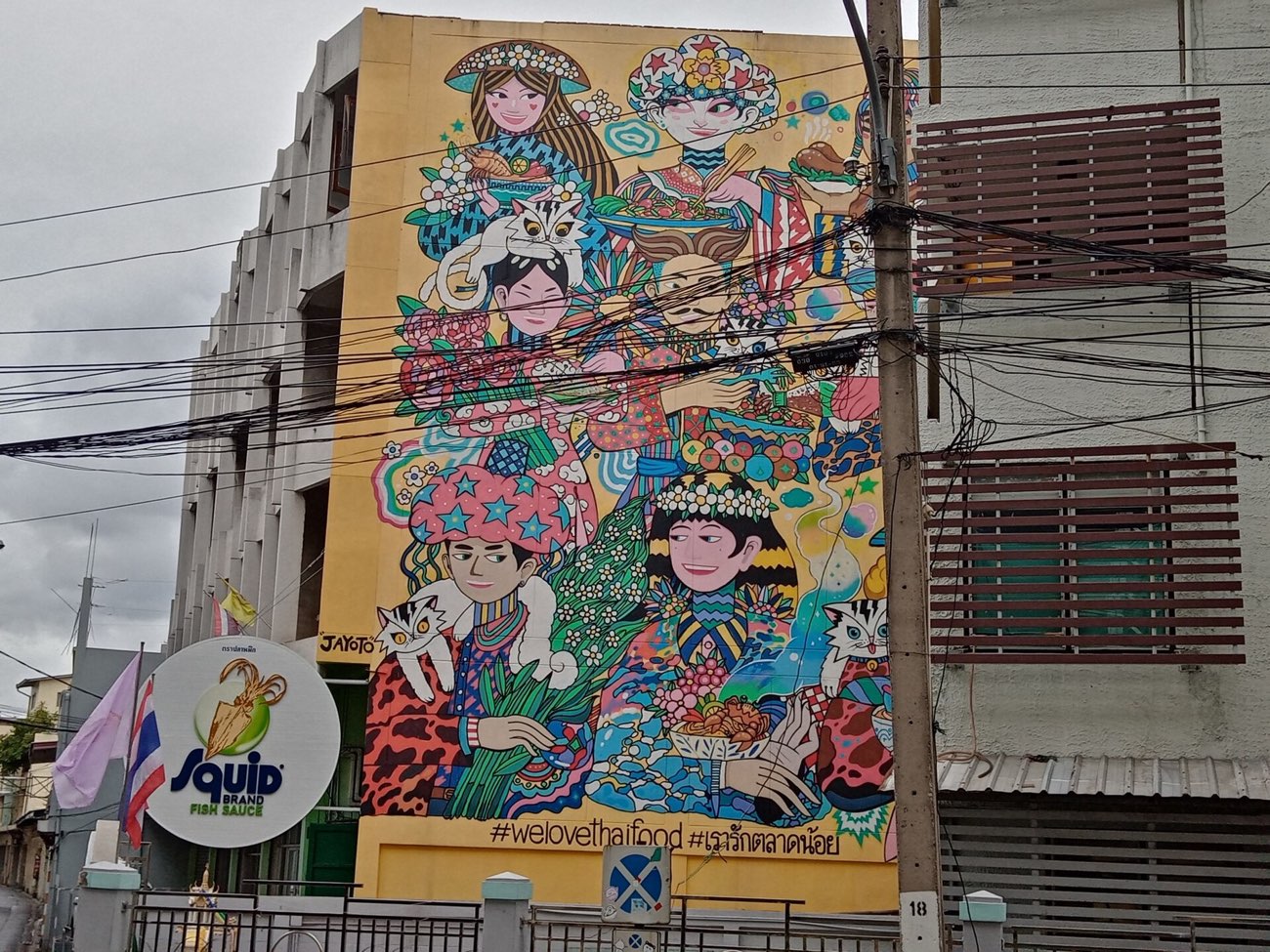
Talad Noi, folded in behind it, is the photogenic half. This has been a machine-parts quarter for generations, and it still is — working auto garages operate right beside street-art murals, engine blocks rust in photogenic heaps, and the famous rusted VW van sits waiting for its ten-thousandth portrait. So Heng Tai, a Chinese courtyard mansion hidden in the lanes, charges ฿50 (~$1.50) to step two centuries backward. Cafés anchor the wandering — Mother Roaster and Hong Sieng Kong are the established stops, flat whites run ฿100–180 (~$3–5) — and the whole circuit is 90 unhurried minutes on foot.
Charoenkrung next door
The creative belt doesn't stop at the district line. Charoenkrung — Bangkok's first paved road — runs south as the city's official Creative District: TCDC (the design center that seeded the whole movement), Warehouse 30's converted godowns, galleries, jazz bars, and heritage eats led by Prachak, serving roast duck since 1909. Every February, Bangkok Design Week (140+ venues) makes this the single best week of the year to be based here.
Practical wandering notes: come mid-afternoon, shoot in the golden hour, then walk ten minutes north into Yaowarat as the food stalls fire up — the two districts are one evening, not two. Most of the murals and cafés wind down by early evening, which is exactly why nights here are so easy to sleep through. More zero-baht wandering on our free things to do page.
Go before it finishes gentrifying
Honesty requires saying it: Talad Noi is now notably touristy — weekend afternoons bring photo queues at the VW van, and some garages have hung polite signs asking visitors not to pose on the machinery people are actually fixing. This is a live gentrification story, with the Hua Lamphong redevelopment pressing from one side and rising rents from the other; the auto shops and sack-haulers that give the district its texture are precisely what its success is squeezing out. None of that is a reason to skip it — it's a reason to go now rather than in three years, spend money at the family-run places, and stay out of the workshops' way.
As a base, the equation is simple: no rail on the doorstep — you walk in from MRT Hua Lamphong or arrive by Chao Phraya boat — a handful of boutique rooms, silence by 22:00, and the best coffee radius in Bangkok at breakfast. For a first trip that's a poor trade against Sukhumvit's BTS spine. For a third trip it might be exactly the Bangkok you came back for.
Bookable around Talad Noi
The practical bit
FAQ
What is Talad Noi known for?
The collision: a working machine-parts quarter where auto garages operate beside street-art murals, rusted engine heaps and the famous VW van photo op, plus the So Heng Tai courtyard mansion (฿50, ~$1.50) and a first-rate café wave — Mother Roaster, Hong Sieng Kong. It's the most photographed 'old Bangkok' texture in the city, precisely because it's still real and still working.
Is Song Wat Road worth visiting?
Yes — it's the emerging district of 2025–26 and the consensus pick for Bangkok's coolest street. The 'Made in Song Wat' collective has grown from 13 to 60 businesses in about 18 months — coffee, galleries and bars inside century-old riverside godowns, with the wholesale trade still running between them. Time Out put it on the world's-coolest list; go on a weekday if you want it to yourself.
Should I stay in Talad Noi?
Only if it's not your first Bangkok. There's no BTS or MRT at the door — you walk from Hua Lamphong or arrive by river boat — hotel stock is a handful of boutique rooms, and the district goes silent by 22:00. Repeat visitors who want quiet, coffee and character will love it. First-timers should base in Chinatown or Sukhumvit and visit for an afternoon; the district asks nothing more of you.
How do I get to Talad Noi?
Walk from MRT Hua Lamphong (Blue Line), or take the Chao Phraya Express along the river to a nearby pier. From most of the city, the MRT is the simple answer — and the walk in past the old station and into the lanes is part of the experience. Grab works too, but the lanes are narrow; get dropped on Song Wat Road and continue on foot.
Is Talad Noi too touristy now?
It's heading that way, honestly — 'notably touristy' is the fair 2026 description, with weekend photo queues at the VW van and garages posting signs asking visitors not to climb on the work. The gentrification is happening in real time, which is the argument for going now, on a weekday, spending at the family-run shops and staying out of the workshops' way — not for skipping it.