Songkran:
survive it
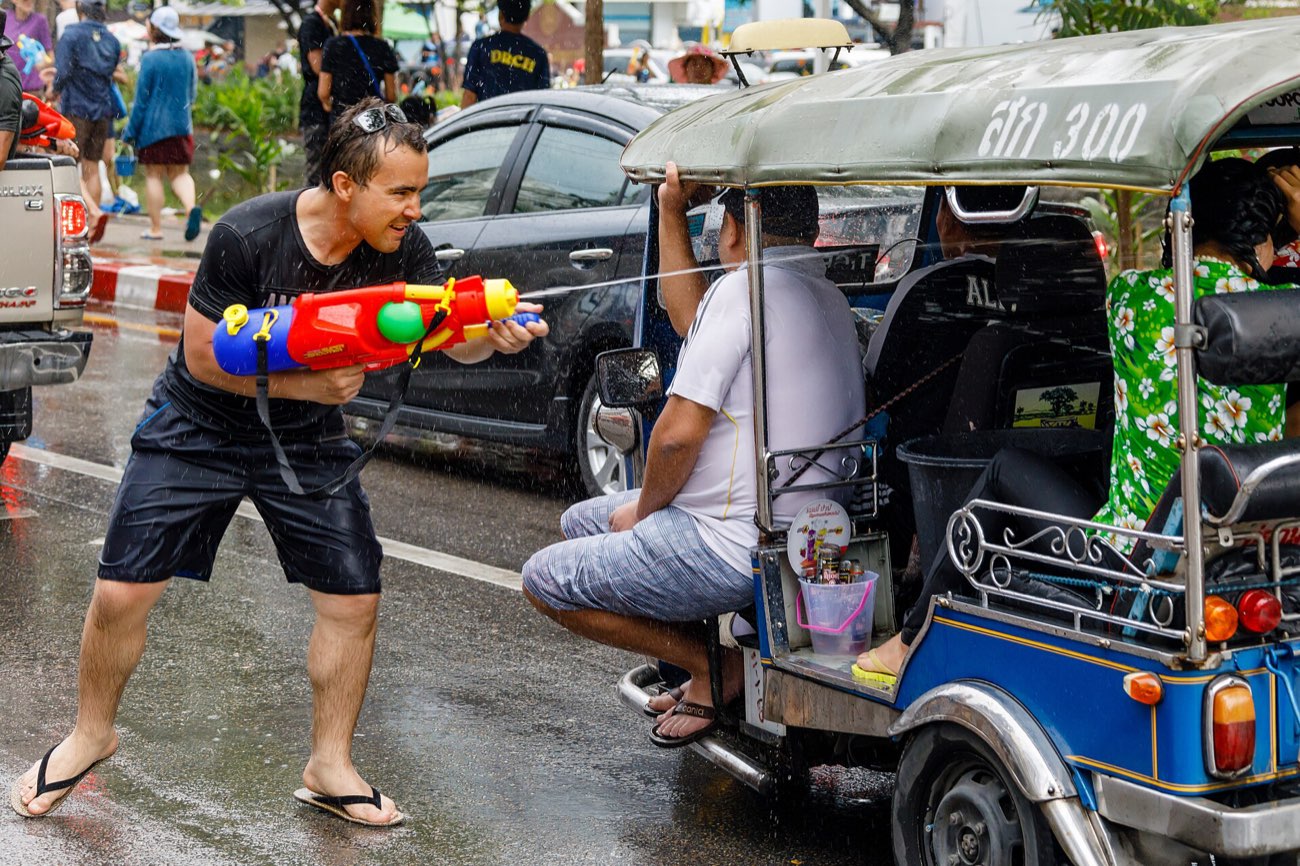
Songkran is Thai New Year, April 13–15 plus a week-long 'Maha Songkran' program around it — UNESCO-listed heritage on paper, the world's biggest water fight on the street. In the battle zones nobody is exempt except monks, the elderly and police on duty; everyone else is a target, including you, holding your phone. Come for it deliberately and it's one of the great festival experiences anywhere. Land in it accidentally, mid-temple-itinerary, in 40°C April heat, and you'll spend three days damp and furious. Hotels sell out — book 2+ months ahead.
A new year first, a water war second
Songkran is the Thai solar new year, and the water started as ritual: gently pouring scented water over Buddha images and elders' hands to wash the old year away. That version still happens — temples run morning rituals through the festival, and going once, early, is the move that makes the rest of the chaos make sense. Then the ritual scaled up, armed itself with water guns, and became the street festival UNESCO inscribed on its heritage list.
The modern city version: three official days (plus the state-promoted Maha Songkran week around them) in which main-street Bangkok becomes a declared water-fight zone. It lands in April for a reason — the hottest month, routinely 40°C — which is why what sounds miserable is actually the one time of year a stranger's ice bucket is a favor.
The battle zones
Silom is the mega-fight — multiple days, the whole road closed, the biggest crowds and the heaviest firepower in the city. Go via BTS Sala Daeng and accept that you'll be soaked before the bottom of the station stairs.
Khao San is the backpacker theater of the war: denser, drunker, foamier, running late into its 4am-zone night. Siam Square is the third front — younger, more Thai, big stage-event energy between the malls.
Everywhere else is a spectrum, not a sanctuary: side sois skirmish, pickup trucks with water barrels patrol, and any foreigner on foot is presumed enlisted. Malls, hotels and the BTS itself are the de facto neutral zones. Plan movement like weather — you can't negotiate with it, only dress for it.
Survival, itemized
Book the April trip
FAQ
When is Songkran?
April 13–15, every year — the dates are fixed, not lunar. Bangkok wraps a week-long, state-promoted 'Maha Songkran' program around them, so expect festival energy (and festival hotel prices) for the better part of the week.
Can you visit Bangkok during Songkran and stay dry?
Mostly, with tactics: temples and museums in the morning, malls and the BTS as corridors, Grab door-to-door, and never walk Silom, Khao San or Siam Square unless you're playing. But 'mostly' is the ceiling — a soi kid with a bucket answers to no itinerary. If staying dry is a hard requirement, April 13–15 is the wrong window entirely.
Is Songkran safe?
The water fight itself is good-natured — the risks are around it: roads are at their most dangerous of the year during the holiday (skip scooters this week), phones drown, and 40°C heat plus alcohol plus dehydration is the classic tourist fail. Waterproof the phone, alternate water with the drinks, and it's one of the safest big festivals anywhere.
Do hotels really sell out for Songkran?
Yes — it's one of Bangkok's two genuine sellout windows (December–January cool season is the other). Rooms near the battle zones and BTS stations go first. Book 2+ months out, refundable, and you've solved the only Songkran problem money can solve in advance.
What should I do on the temple side of Songkran?
Go to a temple on the morning of the 13th: watch (or join) the pouring of scented water over Buddha images and catch the merit-making. It's the origin of everything happening on the street, it's calm and genuinely moving, and it takes an hour. Then go get soaked with a clear conscience.